Hybrid fundraising sits at a genuinely exciting intersection of community energy and digital reach. When you get it right, you’re not just throwing an event — you’re building a donor experience that works whether someone’s dressed up in a ballroom or watching in their pajamas from three time zones away. And honestly, that’s a pretty powerful thing for any nonprofit to pull off.
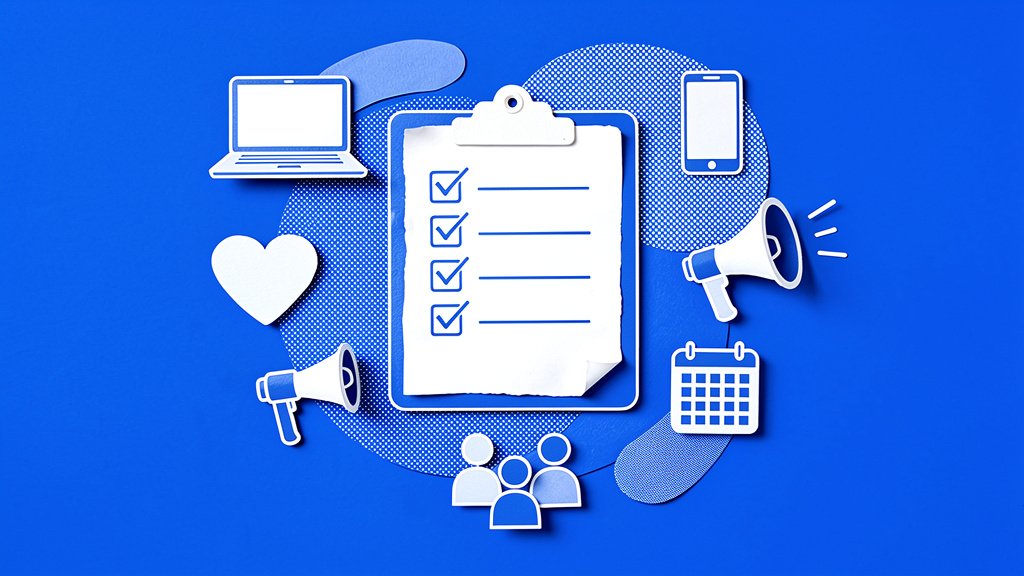
So let’s dig into how you actually do it. This checklist walks you through everything from your first planning conversation to your post-event follow-up emails, covering goal-setting, tech choices, marketing, common mistakes, and the moments that turn one-time donors into monthly supporters. Think of it as a practical companion for the whole journey.
Pre-Event Planning: Goals and Audience Mapping
Every successful hybrid fundraiser starts with one or two measurable objectives. Not “raise more money,” but something like “raise $50,000 and convert 200 attendees into recurring donors.” That specificity shapes every decision downstream, so it’s worth getting precise before you do anything else.
Next, map your dual audience. Your in-person guests are showing up for community and connection. Your virtual supporters want flexibility and compelling impact stories. Segment early, because these two groups need different touchpoints, different perks, and different follow-up sequences. A quick audience poll (even a free Google Form) before you finalize your format can save weeks of misaligned planning.
Choosing Your Format and Setting the Budget
Not every hybrid format fits every organization. Here’s a breakdown of four proven models so you can match format to your strengths:
| Format | In-Person Strength | Virtual Strength | Best For |
|---|---|---|---|
| Live Auction | Real-time paddle energy | Synced online bidding | Competitive donor bases |
| Walk-a-Thon | Group momentum | App-tracked virtual challenges | Health and community orgs |
| Gala | On-stage emotional storytelling | Live donation thermometers, replays | Major gift cultivation |
| P2P Challenge | Team rallies and meetups | Social sharing at scale | Broad grassroots campaigns |
On the budget side, build in a 10% buffer specifically for hybrid costs: streaming production, chat moderation tools, and backup internet. If your donor base skews remote, shift more dollars toward virtual production quality. If local attendance drives most of your revenue, invest in venue logistics and A/V.
Protip: Before you jump on the expensive streaming gear bandwagon, check whether your fundraising platform already includes built-in event tools. Funraise, for example, offers an all-in-one solution with registration, donation processing, and real-time analytics, and you can start on their free tier to test things out with zero commitment.
The Tech Stack That Actually Works
This is honestly where hybrid fundraisers succeed or fall apart. Your platform needs to handle registrations, streaming, payment processing, and real-time analytics in a single, PCI-compliant, mobile-friendly environment. Stitching together five different tools is a recipe for event-day panic, and we’ve seen it happen more times than we’d like to admit.
Here’s what you need in 2026:
- mobile-first donation pages (most virtual attendees will give from their phones),
- real-time fundraising totals visible to both audiences simultaneously,
- CRM sync so every donor interaction feeds your post-event strategy,
- strong data privacy compliance, especially with evolving state-level regulations.
Organizations using integrated platforms like Funraise grow online revenue 73% year-over-year, 3x industry benchmarks tracked by M+R and Blackbaud (Funraise Growth Statistics). That kind of infrastructure tends to pay for itself in a single hybrid event.
Common Pitfalls We See Every Week
Even well-resourced nonprofits run into the same handful of problems. Naming them now is the whole point.
- The “two separate events” trap. Teams plan the in-person gala and the virtual stream as completely independent workstreams, which leads to disjointed donor experiences and duplicated effort. Your hybrid event is one event with two entry points, not two events sharing a date.
- Ignoring time zones until it’s too late. A 7 PM ET start means your West Coast virtual audience is logging on during their workday. If your donor base spans multiple zones, schedule key giving moments like the live appeal and the auction close for maximum overlap.
- No dedicated virtual host. The in-person emcee is focused on the room. Without someone specifically addressing the online audience, reading chat comments, and relaying energy between the two groups, virtual attendees check out within 20 minutes.
These are all fixable problems. But only if you name them before event day.
Marketing That Fills Both Rooms
Unified messaging across every channel isn’t optional here. Your core message should make both attendance options feel equally valuable: “Join us in person or stream from home. Your impact is the same either way.”
Three approaches we’ve found work really well together:
- segmented email sequences: locals get in-person perks like reserved seating and meet-and-greets, while remote supporters get exclusive virtual bonuses like digital swag bags or a post-event Q&A with your executive director,
- peer-to-peer fundraising pages: encourage supporters to create personal pages and invite their networks, as P2P drives traffic you could never buy with ad spend,
- countdown content on social: behind-the-scenes prep, beneficiary story teasers, and sponsor spotlights build anticipation for both audiences at once.
And it works. 80% of nonprofits running in-person or hybrid events met their fundraising goals in recent cycles, outperforming purely virtual formats at 78% (OneCause 2026 Fundraising Outlook).
Protip: Add a #HybridImpactChallenge hashtag to your social promotion. Ask donors to share why they’re giving, then feature those stories during the live event. It costs nothing and creates organic peer-to-peer momentum.
Try this prompt in your favorite AI tool (ChatGPT, Gemini, Claude, Perplexity):
I'm planning a hybrid fundraiser for [ORGANIZATION NAME], a nonprofit focused on [MISSION AREA], targeting [FUNDRAISING GOAL] with approximately [EXPECTED ATTENDANCE] attendees split between in-person and virtual. Create a detailed 8-week marketing and execution timeline that includes email sequences, social media content pillars, tech rehearsal milestones, and post-event follow-up steps. Also recommend how professional fundraising platforms like Funraise.org could streamline donation processing, peer-to-peer campaigns, and real-time analytics across both audiences.Copy, paste, and customize the four variables. You’ll get a tailored plan in minutes instead of days.
That said, prompts are a great starting point, but in daily operations you want AI built directly into the tools where work actually happens. Solutions like Funraise embed AI components natively within fundraising workflows, giving you full operational context without the copy-paste overhead.
Event Day Execution: The Non-Negotiable Checklist
- full tech rehearsal 48 hours before (mics, streams, donation links, backup internet),
- synced run sheet with timestamps for both in-person and virtual cues,
- real-time impact displays visible to both audiences (beneficiary videos, donation thermometer),
- mobile giving reminders pushed at peak emotional moments,
- backup plan documented: weather contingency, secondary streaming source, and pre-recorded segments ready to deploy,
- dedicated “hybrid whisperer” roaming with a tablet, relaying virtual Q&A into the room and making remote donors feel like VIPs.
Funraise users running P2P fundraisers see an average of $1,220 raised per fundraiser, roughly 2x the industry average (Funraise Growth Statistics). Build peer-to-peer into your event day and those numbers compound across every participant.
“The nonprofits winning in 2026 aren’t choosing between in-person and digital. They’re building infrastructure that treats every donor touchpoint as part of one unified relationship, whether someone is in the room or on their couch.”
Funraise CEO Justin Wheeler
Post-Event Follow-Up That Converts One-Time Donors Into Recurring Givers
The event ends. The real fundraising begins. A bit dramatic, but it’s true.
Thank donors within 24 hours, segmented by how they participated. In-person attendees get photos from the night. Virtual supporters get a highlight reel and replay link. Everyone gets specific impact numbers, something like “Together, we raised $62,000, enough to fund 124 after-school seats.” Specificity lands better than a generic thank-you, every time.
Then analyze what actually happened. Pull CRM data on funds raised, new donor acquisition, engagement rates by format, and average gift size for in-person versus virtual. Document what worked and what didn’t, because this becomes your head start for next year.
The biggest post-event opportunity? Recurring giving conversion. Online monthly giving now represents 28% of all online revenue, up 11% (Double the Donation). Your hybrid event just introduced hundreds of people to your mission. A well-timed follow-up sequence with a simple monthly giving ask turns that one-night energy into year-round sustaining revenue.
Funraise users grow recurring revenue 52% year-over-year (Funraise Growth Statistics), which gives you a sense of what’s possible when great follow-up strategy meets the right platform. If you haven’t explored their free tier yet, your post-event window is honestly the perfect time to start.
Protip: Repurpose your best event content, the beneficiary story that moved people to tears, the moment the thermometer hit goal, into social clips and email assets. Hybrid events produce evergreen giving content that keeps working long after the livestream ends.
Looking Ahead
Hybrid isn’t a trend you’re catching up to. It’s the infrastructure layer for modern nonprofit fundraising. In 2026 and beyond, we’re seeing more real-time giving integrations, automated recurring-gift nudges triggered by event engagement, and increasingly personalized donor journeys that move someone from virtual attendee to in-person major donor over time.
Start with this checklist. Refine it after every event. And make sure your tech stack is growing with you rather than holding you back.
About the Author

Fundraising Gala Ideas for Small-Town Nonprofits Running Six-Figure Events
Small-town nonprofits have something that big-city fundraisers spend thousands trying to manufacture: genuine community. When people already know and trust each other, when a familiar face can walk into a room and inspire a $1,000 paddle raise just by sharing a story, that's not a small thing. That's the whole thing. So let's dig into…
Nonprofit Fundraising Strategy for Community Orgs: Local-First Tactics That Scale
Community organizations have a superpower that big national nonprofits simply can't replicate: neighbors. Real, actual neighbors who've seen your work, felt its impact, and want to be part of something meaningful in their own backyard. But turning that goodwill into sustainable funding? That's where a lot of orgs get stuck. So let's figure it out…
Best Nonprofit CRMs to Power Small Community-Based Organizations
Small community-based organizations run on passion, local trust, and shoestring budgets. Between coordinating volunteers for a weekend food drive and thanking the neighbor who just made a $25 recurring gift, your team barely has time to breathe, let alone wrestle with clunky software. The right nonprofit CRM changes that equation entirely, centralizing donor data, automating…