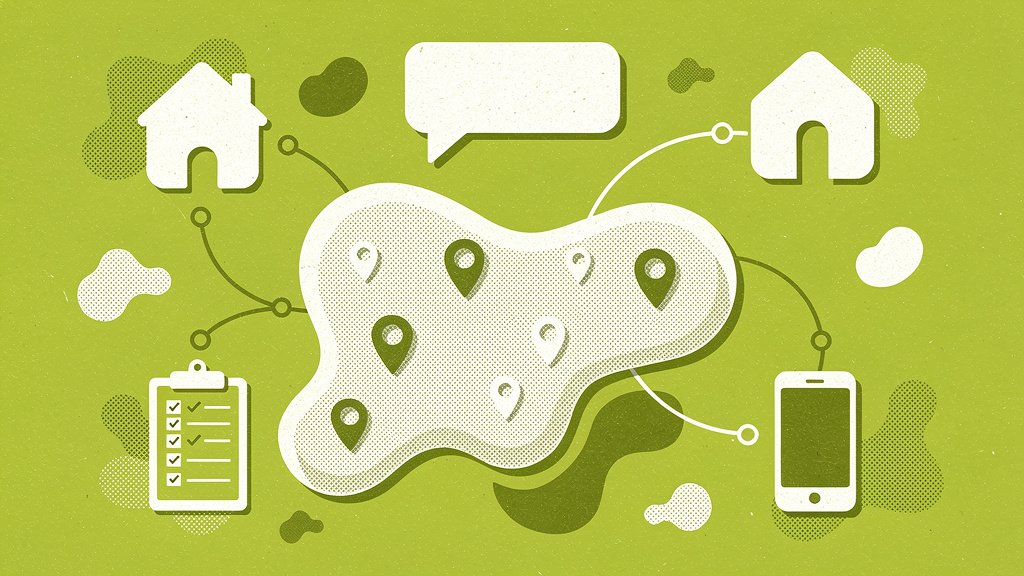
Knocking on doors still works. It’s one of the most authentic ways nonprofits build real trust in local communities, and no algorithm has figured out how to replicate the warmth of a genuine porch conversation. But here’s the thing: the data captured during those conversations? It too often ends up stuffed into a folder, transferred to a spreadsheet no one opens, and quietly forgotten.
That’s what we’re here to dig into. This piece is a practical playbook for modernizing your neighborhood canvassing without losing the human connection that makes it worth doing in the first place. We’ll walk through the tools, the workflows, the mistakes we see constantly, and yes, even a slightly unconventional idea or two for keeping your volunteers actually engaged.
Why Bother Modernizing?
Traditional canvassing does something digital channels simply can’t replicate: genuine face-to-face rapport. In one community project, canvassers visited 3,000 homes and collected 800 surveys that surfaced unexpected priorities, like demand for shade trees over air conditioning, insights no online poll would’ve uncovered (Fund for Shared Insight).
The problem isn’t the conversation itself. It’s everything that happens after it. Without digital capture, follow-up is slow, segmentation becomes guesswork, and those nuanced insights never reach the fundraising team. Canvassing data analytics close that gap by feeding field notes directly into your CRM, where they can inform email sequences, event invitations, and donation asks. And there’s an equity angle worth naming here too: door-to-door outreach reaches low-income and diverse neighborhoods that web-only surveys routinely miss (Fund for Shared Insight). Modernizing ensures those voices shape your strategy, not just your anecdotes.
Choosing the Right Door-to-Door Canvassing App
Not every tool fits every team. Here’s a side-by-side look at some of the leading mobile canvassing platforms to help you match features to your specific needs:
| Tool | Standout Feature | Best For | CRM Integration | Offline Mode |
|---|---|---|---|---|
| Ecanvasser | Supporter maps + real-time analytics | Volunteer coordination | CallHub, various CRMs | Yes |
| CanvassingHub | Native HubSpot sync, household tracking | Orgs already on HubSpot | HubSpot native | Partial |
| MiniVAN (NGP VAN) | Deep voter-file data | Progressive advocacy campaigns | Democratic databases | Yes |
| Grassroots Unwired | Mobile-first data collection | Lean grassroots teams | Various CRMs | Yes |
| Qomon | Flexible survey builder | Multi-issue nonprofits | Multi-channel | Yes |
All five aggregate door data into supporter profiles that surface engagement patterns, skills, and interests. The key is picking one that actually talks to the rest of your stack, because a great canvassing app that doesn’t connect to your CRM is just a fancier clipboard.
Protip: If your team is small, start with Ecanvasser’s free trial. Its self-generated member directory cleans your database automatically while mapping active supporters on a single dashboard.
The Struggles We See Every Day
Before organizations modernize their canvassing workflow, the same pain points come up again and again. We’re not exaggerating when we say we hear versions of these constantly:
- “We collected 400 door surveys last quarter and never followed up with a single one.” Field data sits in a binder while the development team builds email lists from scratch, completely unaware those conversations even happened,
- “Our volunteers quit because the process felt pointless.” When canvassers never see how their notes translate into action, motivation craters. Retention drops, and institutional knowledge walks out the door with them,
- “We ran three canvassing drives in the same zip code without realizing it.” Without centralized tracking, different program teams duplicate effort, annoying residents and wasting precious volunteer hours.
If any of those sound familiar, you’re not alone. The fixes below are designed with exactly these breakdowns in mind.
Bridging Offline Conversations and Online Giving
Here’s where it gets genuinely exciting. The real magic happens when field notes flow into your grassroots supporter engagement software without manual re-entry. Tools like CanvassingHub sync conversation tags like “interested in volunteering” or “asked about monthly giving” straight to HubSpot, triggering automated follow-ups within hours instead of weeks.
This hybrid approach lets you track how a single doorstep chat influences downstream actions, like event registrations or first-time donations. Organizations using Funraise’s analytics capabilities have seen nonprofits raise 7x more online annually (Sisense). While that metric reflects broader data unification, the point stands: connecting offline insights to your online fundraising engine multiplies the value of every knock.
Pair canvassing with peer-to-peer texting for a true multi-channel sequence. One knock becomes an SMS check-in, then a personalized email, then a donation page visit, all tracked under a single supporter record.
Protip: After each canvassing shift, run a five-minute “hot lead” huddle. Flag the top 10 warmest contacts and push them into a nurture sequence that same evening. Speed matters more than perfection here.
Capturing Deeper Insights On-Site
Standard scripts with yes/no checkboxes leave the richest data on the table. Deep canvassing techniques lean into open-ended questions about priorities, barriers, and motivations, the kind of qualitative texture that transforms a name in a database into a three-dimensional supporter profile.
One neighborhood planning initiative canvassed over 4,000 doors and gathered input in multiple languages, feeding a master plan that actually reflected resident needs rather than assumptions (Fund for Shared Insight). Modern apps support custom survey questions, voice-to-text logging, and sentiment tagging so nothing gets lost between the porch and the office. And offline-capable apps make sure rural and low-connectivity areas aren’t excluded from that process. Equity isn’t optional here. It’s the entire point of showing up in person.
Ready to put AI to work on your canvassing strategy? Copy the prompt below and paste it into your preferred AI assistant (ChatGPT, Gemini, Claude, Perplexity, or whichever you use daily):
I run a nonprofit focused on [CAUSE/MISSION] in [CITY OR REGION]. We currently canvass approximately [NUMBER] doors per month and track results in [CURRENT TOOL, e.g., spreadsheets, paper forms, CRM name]. Suggest a step-by-step plan to modernize our neighborhood canvassing workflow for richer supporter insights. Include recommendations for mobile canvassing apps, CRM integration points, volunteer training tips, and how a platform like Funraise.org could help unify our offline field data with online fundraising and donor retention efforts.Prompts like this are a solid starting point, but in day-to-day nonprofit work we’ve found it pays to rely on solutions like Funraise that embed AI components directly inside the tools where your team already operates. That gives the model full operational context rather than requiring you to copy-paste data back and forth.
Turning Field Data into Predictive Intelligence
Dashboards are nice. Predictive insights are better. After a canvassing push, look for patterns: Where do supporters cluster geographically? Which concerns come up most often? Which households have had multiple positive interactions and might be prime candidates for recurring giving?
Nationally, donor retention hovers around 32% (Funraise), and first-time donor retention dips below 25%. Canvassing gives you a head start on beating those averages because a face-to-face introduction creates an emotional anchor that cold email never will. Layer in data analytics to segment warm leads into tailored follow-up tracks, and retention climbs. That said, one sobering reality to keep in mind: 90% of nonprofits collect data, but only 5% act on it (Funraise). Modern canvassing tools exist precisely to close that gap by making insights visible and immediate, not buried in quarterly reports.
“The nonprofits that win long-term are the ones that treat every supporter touchpoint, whether it’s a doorstep conversation or a digital donation, as part of a single, continuous relationship.”
Funraise CEO Justin Wheeler
An Unconventional Move: Gamify Your Canvassing Shifts
Okay, we know “gamification” might sound like corporate buzzword soup (it kind of is, we’ll admit it), but hear us out. Ecanvasser’s team stats feature lets you run real-time leaderboards during canvassing shifts. Add custom badges for “Insight Hunter” (deepest conversation logged) or “Connector” (most referrals captured), and suddenly data quality becomes a point of friendly competition.
Pair that with brief AI-generated post-knock summaries so canvassers get instant feedback on their notes. This frees volunteers to focus on the human side while the system handles categorization, a combination that’s been shown to drive higher volunteer retention and richer data sets. It’s a small structural tweak with an outsized impact on both morale and quality.
Measuring What Matters
Track these KPIs after every canvassing cycle:
- interactions per volunteer hour (efficiency),
- conversion to next step such as donations, sign-ups, or volunteer commitments (aim for 20% of contacts advancing),
- insight-to-funds ratio: new recurring revenue attributed to canvass-sourced contacts divided by total volunteer hours,
- cohort retention lift: compare 6-month retention of canvass-acquired donors vs. digital-only donors.
Protip: Audit your tech stack quarterly. Consolidating toward a single CRM-integrated canvassing app cuts onboarding time significantly, which matters a lot given chronic nonprofit staffing shortages. And if you haven’t explored Funraise yet, their free tier lets you test how unified fundraising data changes your decision-making with zero financial commitment.
Start Small, Scale Smart
You don’t need to overhaul everything at once. Pick one neighborhood, equip a pilot team with a door-to-door canvassing app, connect it to your CRM, and measure results over 30 days. In our experience, the data makes the case for expansion far more persuasively than any internal memo ever will.
Modernized canvassing isn’t about replacing human connection with technology. It’s about making sure the insights born from those genuine doorstep moments actually reach the people and systems that can act on them. Every knock has potential. Let’s make sure it counts.
About the Author

Companies that donate to schools: 40 programs and how to apply
Schools and nonprofits often picture corporate giving as one big, splashy check from a household name. Truth is, most of that support shows up in smaller, less glamorous forms: local grants, gift cards, employee matching, volunteer hours, customer-round-up programs. The real skill isn't finding companies with deep pockets. It's figuring out which giving mechanism actually…
25 youth sports fundraising ideas for leagues, teams and travel clubs
Let's be honest: youth sports fundraising usually starts the same way. Someone volunteers (or gets voluntold) to figure out how to cover uniforms, tournament fees, and that one kid whose family can't quite swing the travel costs this season. It's stressful, it's often disorganized, and it tends to fall on whoever raised their hand slowest…
30 PTA fundraising ideas that need no selling and no committee
Every PTA leader knows this feeling: another meeting, another spreadsheet tracking who's selling wrapping paper, another volunteer who's gone quiet on emails. Product sales and big events can raise money, sure, but they eat up people power that most schools just don't have lying around. Here's the good news: you don't need a sales table…