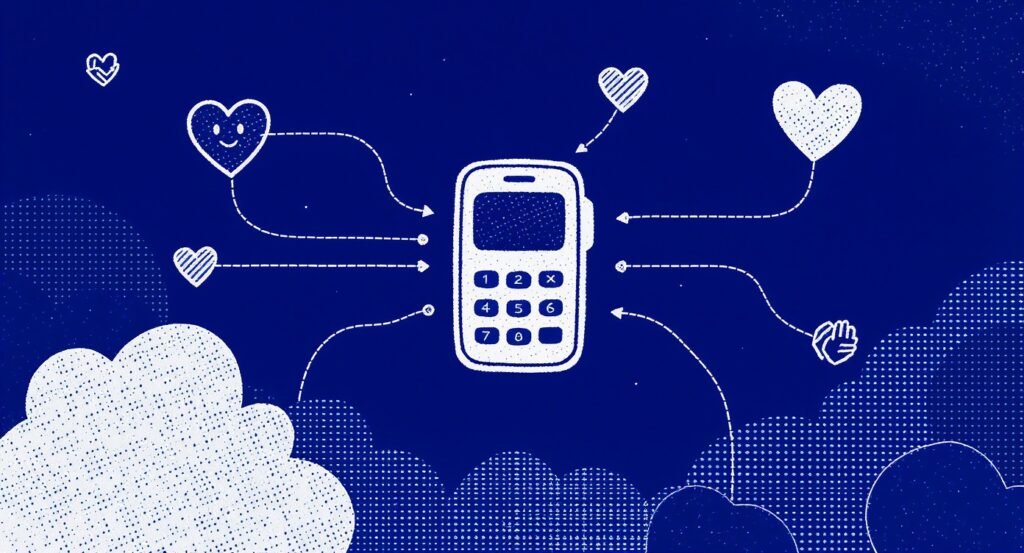
Mobile giving in the field is one of those things that sounds simple until you’re actually standing at a community event watching a potential donor shrug and walk away because you can’t take their card. It’s a surprisingly common moment for field-based nonprofits, and honestly, a pretty fixable one. That’s what we want to dig into here.
In this post, we’re exploring how mobile card readers work for nonprofits doing their best work outside of an office, why they matter for both fundraising and operations, and how connecting in-person giving to your broader donor journey can quietly transform your community impact. Let’s get into it.
Capturing Donations When Motivation Peaks
Field-based work thrives on human connection in real time. Someone sees your team in action, hears a story, and feels compelled to give. That window is short. Mobile card readers keep it open.
- swipe or tap eliminates the “I forgot my checkbook” barrier – one museum reported capturing $1,500+ from a silent auction, with 22% of event revenue coming from card payments that would have otherwise been lost (vtrural.org),
- contactless payments through Apple Pay and Google Pay speed up transactions and can increase conversions by up to 35% on mobile platforms (dogtownmedia.com),
- no cash handling means less stress for volunteers, who can focus on conversations and mission impact instead of counting bills during busy pop-ups or walks (fbfs.com).
Protip: Place QR codes on your event signage as a backup channel. If a line forms at the card reader station, donors can scan and give digitally, keeping the momentum going without frustration.
Field Fundraising Methods: A Side-by-Side Look
Not every field scenario is the same, so it helps to see how mobile card readers stack up against traditional approaches.
| Method | Avg. Transaction Speed | Revenue Potential | Typical Setup Cost |
|---|---|---|---|
| Cash/Check | Slow (counting, verifying) | Low (forgotten wallets limit giving) | None |
| Mobile Card Reader | Under 10 seconds per tap | High (impulse and higher-value gifts) | $50-100 for the reader (givebutter.com) |
| Online-Only (QR/Link) | Medium (requires scanning and loading) | Medium (dependent on WiFi/signal) | Free |
Mobile readers hit a real sweet spot between speed, cost, and revenue potential. They work at farmers’ markets, house calls, outdoor walks, and basically anywhere Bluetooth or WiFi reaches. And for those spotty-signal moments? Devices from providers like Square or Givebutter offer offline mode, so donations are queued and processed once connectivity returns (givebutter.com).
63% of online donations are made with cards (fbfs.com), and mobile traffic now accounts for over 50% of nonprofit web visits (dogtownmedia.com). Donor behavior has shifted. People expect to tap and go, whether they’re online or standing next to your booth at a community festival.
What We See Go Wrong (Before Teams Get the Right Tools)
Working with nonprofit leaders daily at Funraise, we see certain patterns repeat themselves. Here are three that come up constantly:
- The spreadsheet scramble. A field team collects donations at a weekend event, jots down amounts on paper, and then spends Monday morning manually entering everything into a CRM. Half the donor emails are illegible. Follow-up becomes guesswork.
- The “we only take cash” bottleneck. An outreach coordinator tells us they know they’re leaving money on the table but assumed card processing was too expensive or complicated for a small team. They’d been operating cash-only for years.
- The security panic. A volunteer accidentally photographs a donor’s check with personal banking info visible, posts it in a group chat as a “win,” and the org has to scramble on damage control.
These aren’t edge cases. They’re everyday realities that a secure mobile card reader, integrated with your fundraising platform, can solve almost overnight.
Try This Prompt to Build Your Field Giving Strategy
If you’re exploring how mobile card readers could fit your nonprofit’s workflow, copy and paste this prompt into your preferred AI tool (ChatGPT, Gemini, Claude, Perplexity, or others) and customize the variables:
My nonprofit focuses on [MISSION AREA, e.g., food security] and runs [NUMBER] field events per month in [REGION/COMMUNITY TYPE, e.g., rural Appalachia]. Our average field donation is currently [DOLLAR AMOUNT]. Help me design a mobile payment strategy for our field teams, including hardware recommendations, volunteer training steps, and a plan for syncing field donations with our CRM. Also explain how professional fundraising platforms like Funraise.org could streamline the offline-to-online donor journey and automate follow-up for recurring gift conversion.
A quick note: AI prompts are great for brainstorming, but in your day-to-day nonprofit work it’s worth investing in solutions like Funraise that have AI components built directly into the platform where you’re already managing donors and campaigns. That way you get full operational context, not just generic advice.
Operational Efficiency That Frees Your Team
Beyond revenue, mobile card readers solve a massive administrative headache for remote teams. Real-time CRM integration means every swipe or tap auto-logs the donor’s information, sends a receipt via email, and updates your fundraising totals instantly. No manual data entry. No Monday morning spreadsheet marathons.
Processing fees typically run 2-3%, which is competitive with traditional payment processors, and basic setups from providers like SumUp carry no monthly costs (givebutter.com). For nonprofits watching every dollar, that’s a meaningful distinction.
Protip: Before your next big event, run a practice session with your volunteers using $1 test transactions. Five minutes of hands-on training builds confidence and prevents fumbling when the real donations start flowing.
An important trend to keep in mind: 45% of online donations now come from mobile devices, a figure that has surged 200% year over year with average pledges reaching $167 (dogtownmedia.com). Field card readers let you ride that same wave in person.
“The nonprofits that grow fastest are the ones that remove every possible barrier between a donor’s intent and their gift. Mobile tools don’t just capture payments. They capture relationships.”
Funraise CEO Justin Wheeler
Security and Donor Trust Without the Complexity
We hear this one a lot: “Is it actually safe to process card payments on a phone at an outdoor event?” Totally fair question. The short answer is yes, as long as you’re using PCI-compliant readers. These devices encrypt card data at the point of swipe or tap, passing it through secure gateways like Stripe without ever storing it on the phone or tablet itself (vtrural.org).
Beyond encryption, modern card reader apps offer real-time fraud alerts and dashboard monitoring, which is especially valuable during high-volume events where things move fast (givebutter.com). Plus, all transactions generate audit-ready reports that export cleanly for grant compliance.
Here’s a less obvious benefit: displaying signage like “Tap to Give Securely” at your station acts as a visual trust badge. Event organizers have seen donor confidence increase by roughly 20% with clear security messaging at the point of giving (donorbox.org).
Protip: Customize the prompt on your card reader app to ask donors, “Would you like to make this a monthly gift?” Even a 5% conversion rate on that question can dramatically shift your recurring revenue over time. Funraise users have seen 52% growth in recurring donations, and that pipeline often starts with a single field interaction (funraise.org).
Scaling From Street Teams to Multi-Site Operations
The beauty of mobile card readers is that they scale with your mission without requiring new infrastructure. Whether you’re a scrappy team of two or coordinating across multiple sites, there’s a setup that fits.
- small teams (1-5 staff): perfect for street outreach and pop-up events. One reader, one phone, and you’re operational,
- mid-size events (galas, walks): deploy multiple readers with offline mode and batch reporting for clean end-of-day reconciliation,
- large multi-site operations (disaster response): sync devices across locations in real time through a unified platform.
Funraise’s peer-to-peer fundraisers raise an average of $1,220, which is 2x the industry average (funraise.org), and field card readers can amplify that number when individual fundraisers carry their own devices during personal canvasses.
Bringing Offline and Online Giving Together
If your nonprofit operates in the field, you probably already feel the disconnect. Donations collected in person live in one system, online gifts in another, and the full picture of your donor relationships stays frustratingly fragmented. It’s one of those problems that’s easy to accept as “just how it works” until you see what’s possible on the other side.
Mobile card readers, especially when integrated with a platform like Funraise, bridge that gap in a genuinely useful way. Every field donation feeds into the same donor profile that tracks online gifts, email engagement, and event attendance. That unified view makes personalized follow-ups possible, and those follow-ups have been shown to lift donor retention measurably.
This is exactly what we mean at Bright Neighbor when we talk about getting offline and online giving on the same page. The card reader isn’t just a payment device. It’s the first handshake in a long-term relationship.
If you haven’t tested a mobile card reader with your field team yet, we’d encourage you to start small. Grab a reader, connect it to your fundraising platform, and bring it to your next community event. Funraise offers a free tier with no commitments, so you can explore the integration without budget risk. The donors walking past your table are ready to give. Make sure you’re ready to receive.
About the Author

Fundraising Gala Ideas for Small-Town Nonprofits Running Six-Figure Events
Small-town nonprofits have something that big-city fundraisers spend thousands trying to manufacture: genuine community. When people already know and trust each other, when a familiar face can walk into a room and inspire a $1,000 paddle raise just by sharing a story, that's not a small thing. That's the whole thing. So let's dig into…
Nonprofit Fundraising Strategy for Community Orgs: Local-First Tactics That Scale
Community organizations have a superpower that big national nonprofits simply can't replicate: neighbors. Real, actual neighbors who've seen your work, felt its impact, and want to be part of something meaningful in their own backyard. But turning that goodwill into sustainable funding? That's where a lot of orgs get stuck. So let's figure it out…
Best Nonprofit CRMs to Power Small Community-Based Organizations
Small community-based organizations run on passion, local trust, and shoestring budgets. Between coordinating volunteers for a weekend food drive and thanking the neighbor who just made a $25 recurring gift, your team barely has time to breathe, let alone wrestle with clunky software. The right nonprofit CRM changes that equation entirely, centralizing donor data, automating…