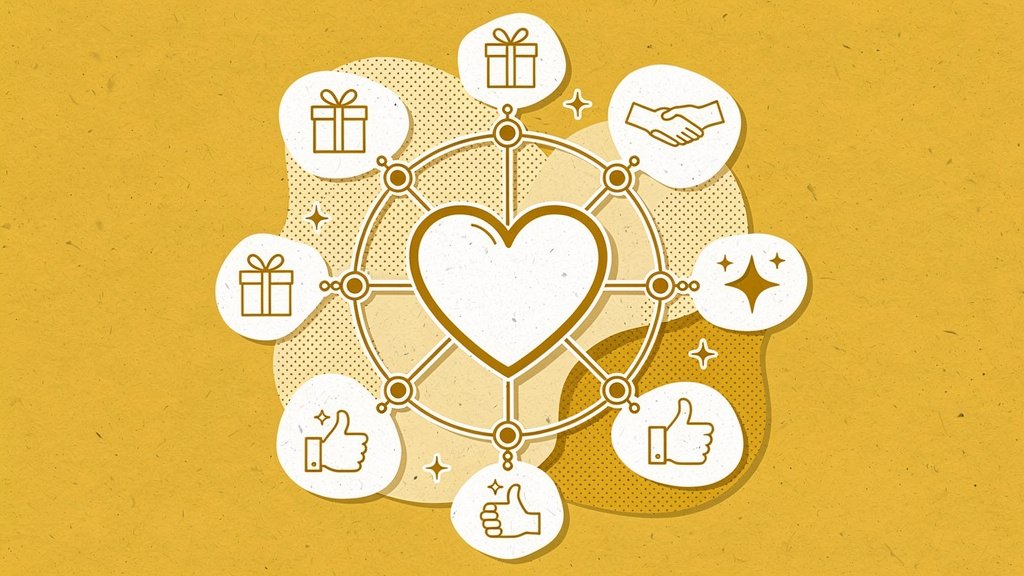
Donor appreciation tends to get filed under “we really should do more of that” right alongside updating the website and finally cleaning out the supply closet. But here’s the thing: how you say thank you is arguably more important than how you ask. It shapes whether someone becomes a lifelong supporter or quietly disappears after their first gift. So let’s dig into 12 creative, practical ways to turn your gratitude moments into something donors actually remember, and maybe even talk about.
We’re covering everything from hyper-personalized thank-yous and digital donor walls to peer recognition circles and AI-powered stewardship workflows. Whether you’re working with a lean team or trying to scale what’s already working, there’s something in here for you.
1. Hyper-Personalized Thank-Yous That Actually Feel Personal
Generic “Dear Friend” emails are retention killers. 13% of donors stop giving because they never got thanked, and 18% cite poor communication as their reason for lapsing (Funraise). The fix is straightforward but requires discipline: reference the donor’s history, name the specific program their gift supported, and add a human touch like a handwritten line from a staff member or even a beneficiary.
Instead of “Thank you for your generous donation,” try something like: “Maria, your third year of support just helped us place 14 families in permanent housing this quarter. Here’s a 30-second video from one of them.”
Segment your thank-you templates by donor tenure. A first-time giver needs a warm welcome sequence. A five-year veteran deserves real acknowledgment of their loyalty. Your CRM should make this feel effortless, not like a manual chore you dread every week.
2. Impact Storytelling Spotlights Across Multiple Channels
Donors don’t want receipts. They want proof that their money mattered. Impact storytelling bridges that gap, and in our experience, the most effective nonprofits deliver it across email, social media, and video simultaneously.
| Channel | Tactic Example | Why It Works |
|---|---|---|
| Email / Newsletter | Personalized impact report tied to donor’s gift area | Builds emotional connection and reduces lapse risk |
| Social Media | Donor shoutouts paired with beneficiary stories | Amplifies word-of-mouth and attracts new supporters |
| Video | 60-second clip filmed at the program site | Increases engagement significantly over text-only updates |
The key is specificity. Send animal shelter donors pet rescue updates, not a generic organizational overview. This kind of segmented storytelling can drive 30% higher open rates on your emails.
3. Themed Virtual Appreciation Events (Not Fundraisers)
Host a Zoom happy hour, a behind-the-scenes webinar, or a live Q&A with your program team. One rule: no asks. This is purely about saying thank you. Keeping attendance around 50 people means donors can actually interact, and building beneficiary testimonials into the agenda gives the whole thing real emotional weight.
Here’s an unconventional twist worth trying: surprise attendees with a flash performance by program participants. A youth choir, a poetry reading, an art reveal. It creates an emotional peak that donors will talk about for months, and honestly, it’s the kind of thing that makes your org feel alive rather than institutional.
And don’t let the moment vanish when the call ends. Record a two-minute highlight reel and send it to anyone who couldn’t attend. It extends the gratitude window and gives them a genuine reason to show up next time.
4. Interactive Digital Donor Walls
Physical plaques in lobbies are fine, but they reach a pretty tiny audience. A digital donor wall on your website can showcase names, giving levels, mini-profiles, and short impact quotes. Unlike a static plaque, visitors can click through to see a donor’s story or a photo gallery from the programs they supported. It’s living, breathing recognition rather than something that collects dust in a hallway.
For major gift donors, consider hosting a virtual naming ceremony via live stream. It turns what used to be a private ribbon-cutting into a shareable community moment, and that’s a meaningful upgrade.
5. Recurring Donor “No-Ask” Perks
Your monthly givers are gold. Recurring donors retain at 83% compared to 45% for one-time givers, and they’re 5.4x more valuable over their lifetime (Dataro). And yet many nonprofits treat them the same as everyone else on the mailing list. That’s a real missed opportunity.
Create a distinct experience for sustainers: exclusive program updates, early access to events, or branded merchandise they weren’t expecting. We’ve found that building differentiated stewardship tracks makes a tangible difference, and platforms like Funraise make it easier to set those tracks up without a ton of manual overhead.
One approach worth trying: declare one month per year a “No-Ask Month” for recurring donors. Fill it entirely with gratitude, stories, and perks. You might be surprised what it does for your upgrade rates.
6. Surprise In-Kind Tokens and Unexpected Delights
A handwritten note from a beneficiary tucked inside a card with confetti. A small bag of coffee from a local roaster with a tag reading “Thanks a latte.” (Yes, that’s a little cheesy. We stand by it.) These low-cost, high-touch gestures create genuine emotional surprise, which happens to be one of the strongest drivers of donor loyalty.
For major donors, scale the gesture: name a garden bed, dedicate a classroom supply shelf, or plant a tree in their honor. Budget roughly 1-2% of gift value for appreciation tokens and track results through follow-up surveys to see what’s actually landing.
Common Challenges We See Every Day
Before nonprofits get their appreciation strategy humming, they almost always hit the same walls. Here are situations we encounter constantly with nonprofit leaders:
- “We thanked them… eventually.” A donor gives on Monday and gets a generic receipt on Friday. By then, the emotional high of giving has faded. Speed matters. Aim for acknowledgment within 48 hours, ideally 24,
- “Our data lives in five different spreadsheets.” You can’t personalize what you can’t find. When donor history, event attendance, and communication preferences are scattered across tools, stewardship becomes guesswork. This is exactly why consolidating into an all-in-one platform like Funraise removes so much friction,
- “We only thank people during the annual campaign.” Appreciation isn’t seasonal. The nonprofits with the strongest retention treat gratitude as a year-round operational habit, not a December checkbox.
7. Leadership Phone Blitzes
Have your executive director, board chair, or program leads personally call your top 20 donors within 48 hours of their gift. No script, no ask. Just a genuine conversation about impact. 62% of donors give only once in their lifetime without proper stewardship (AFP Global), and a two-minute phone call can genuinely change that trajectory.
Try This Prompt in Your Favorite AI Tool
Copy and paste this into ChatGPT, Gemini, Claude, Perplexity, or whichever AI assistant you use daily:
I run a nonprofit focused on [MISSION AREA] with approximately [NUMBER] active donors. Our current donor retention rate is around [PERCENTAGE]. Using best practices in donor stewardship and appreciation, build me a 90-day appreciation calendar that includes personalized touchpoints for three donor tiers (under $100, $100-$999, $1,000+). For each touchpoint, suggest the channel (email, phone, mail, event), a sample message, and how I could use automation features in an all-in-one fundraising platform like Funraise.org to execute it efficiently. Focus on [PRIMARY CHALLENGE, e.g., 'retaining first-time donors' or 'upgrading recurring givers'].It’s worth leaning on solutions like Funraise that have AI components built directly into the workflow where you’re already managing donors, gifts, and campaigns. That means the AI has full operational context rather than requiring you to copy-paste data back and forth between disconnected tools.
8. Peer-to-Peer Recognition Circles
This one’s a little unconventional, but stay with us: let donors thank each other. Create a private forum, a Slack channel, or a simple social media group where supporters share why they give and celebrate each other’s milestones. Spotlight these stories in your newsletter for social proof. 75% of social donors plan to give again after positive community experiences (NonprofitPRO), and peer recognition taps directly into that psychology in a way that top-down communication just can’t replicate.
“The nonprofits that win long-term aren’t just building donor lists, they’re building donor communities. When supporters feel connected to each other, not just to your organization, retention almost takes care of itself.”
Funraise CEO Justin Wheeler
9. AI-Powered Personalization at Scale
Build a tiered appreciation matrix so nothing slips through the cracks:
- gifts under $100 trigger a personalized email with an impact stat,
- gifts over $500 trigger a phone call plus a short thank-you video,
- gifts over $5,000 trigger a site visit invitation.
Platforms like Funraise automate these workflows so your team spends time on relationships, not logistics. Repeat donors retain at 61.3% (Virtuous), and automation ensures every one of them gets acknowledged properly.
Here’s a small but powerful move: set up automated birthday and giving anniversary messages. They cost almost nothing to send and create a personal touchpoint that feels genuinely intentional rather than like a mass blast.
10. Field Trip Ride-Alongs
Invite donors to visit your program sites for a hands-on impact tour. Keep groups small (8-10 people), bring some refreshments, and let beneficiaries and frontline staff do most of the talking. For local supporters, even a casual coffee chat at your office can deepen the relationship in ways that no email ever will. Sometimes you just have to get people in the room.
11. Milestone Anniversary Campaigns
Celebrate giving anniversaries with tiered surprises: a digital badge for year one, a personalized impact summary at year five, a legacy recognition package at year ten. Prioritized stewardship of monthly donors can push retention as high as 98% (Funraise Podcast). Milestones give you a natural, non-transactional reason to reach out and say, “You’ve been with us for three years. Look at what we’ve accomplished together.”
Automate milestone triggers in your CRM if you can. If you’re manually tracking giving anniversaries, you will miss them. It’s just the reality of a busy team.
12. Feedback-Fueled Evolution Loops
Close the stewardship cycle by actually asking donors what they think. Post-event surveys, annual satisfaction checks, and quick polls about communication preferences all signal that you value their voice, not just their wallet. Share aggregated results quarterly so donors can see their input shaping real decisions. Top-performing organizations hit 67.7% retention by prioritizing relationship depth over volume (Virtuous), and that depth starts with listening.
Where to Start
You don’t need to implement all 12 of these tomorrow. Pick three that match your current capacity, track results in your CRM, and scale the winners. If your tech stack is holding you back, Funraise offers a free tier that lets you start consolidating donor management, automated communications, and fundraising intelligence in one place with zero commitment.
The nonprofits that treat appreciation as a strategy rather than an afterthought are the ones building communities of supporters who stick around for years. And that’s really what we’re all here for.
About the Author


How Many Touches Does a Donor Need Before They Give Again?
Keeping donors engaged between gifts is one of those things that sounds simple but trips up even the most well-intentioned nonprofits. Most organizations pour energy into finding new supporters, only to watch a big chunk of them quietly disappear after their first gift. But here's the thing: the gap between what we intend to communicate…
Monthly Giving Programs Tips and Strategies to Increase Retention
Monthly donors are special. They're not just supporters, they're believers who quietly show up for your mission every single month without being asked twice. But building a monthly giving program that actually keeps people around? That's where a lot of well-meaning organizations lose the thread. In this post, we're going to dig into the real…
15 Heartbreaking Donor Churn Statistics (And How to Fix Them)
Donor churn is one of those problems that sneaks up on you. You're busy celebrating new gifts, running campaigns, and keeping the lights on, and meanwhile, a huge chunk of your supporters quietly drift away without a word. It's not a dramatic exit. It's just silence. And for most nonprofits, that silence is costing them…