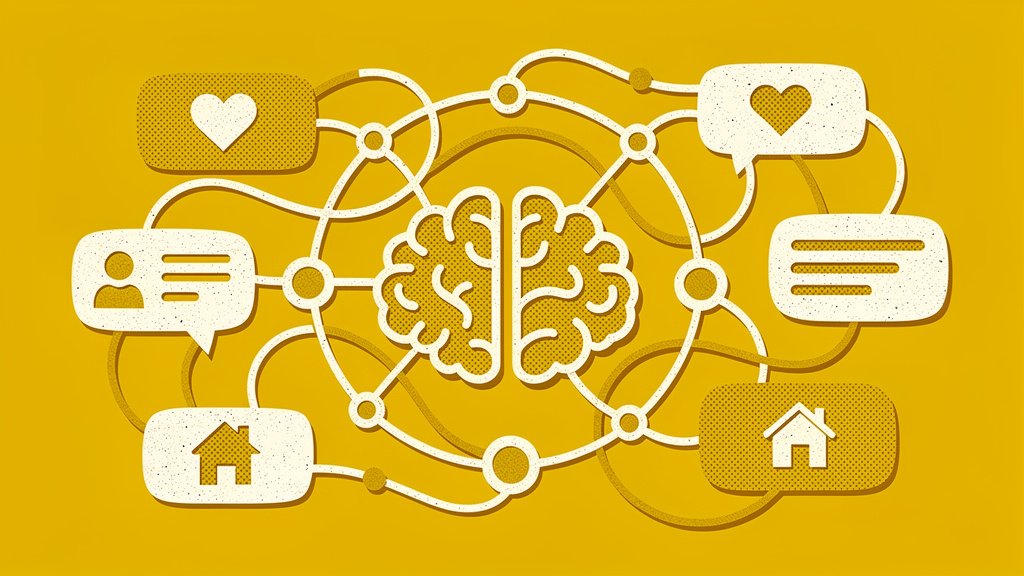
Generative AI has gone from tech-world buzzword to something that’s genuinely showing up in the day-to-day work of community-focused nonprofits. And if you’ve been curious but a little unsure where to start, you’re not alone. We’ve spent a lot of time in this space, and we figured we should do a deep dive into what GenAI actually is, why it matters for mission-driven organizations like yours, and how to put it to work without losing your mind in the process.
Here’s what we’re going to cover together: the real meaning behind generative AI (no jargon, promise), some concrete examples of tools nonprofits are already using, the common stumbling blocks we see all the time, and a practical roadmap to get you from “we should probably try this” to actual results. Let’s get into it.
Understanding Generative AI: What It Actually Means
Generative AI (GenAI) is a category of artificial intelligence that creates new content, think text, images, video, and code, based on patterns it’s learned from massive datasets. And here’s the key distinction: unlike traditional AI that analyzes or classifies existing information, generative AI actively produces original outputs in response to your prompts.
A simple way to think about it:
- traditional AI looks at your donor list and flags lapsed givers,
- generative AI drafts a personalized re-engagement email to each of those lapsed givers, in your organization’s voice.
The technology has moved fast. Early models like GPT-3 opened the door, and current leaders like Gemini 3 Pro, GPT-5.2, and Claude Opus 4.5 have pushed things into multimodal territory, handling text, images, and data analysis all in one conversation. The GenAI market reached $67 billion in 2026 and is projected to hit $1.3 trillion by 2032 (Master of Code, citing industry forecasts). For nonprofit leaders, that trajectory means the tools are only getting more accessible and more capable.
One practical note: you don’t need to understand the technical architecture of large language models. What matters is learning to write clear, specific prompts. Something like “Write a donor thank-you note for a food bank that served 12,000 meals last quarter” will always outperform a vague “Write a thank-you note.” Trust the specificity.
Real-World Examples: GenAI Tools Nonprofits Are Using Right Now
Rather than listing tools in the abstract, let’s map them to tasks you probably tackled this week:
| Tool | What It Creates | Your Nonprofit Use Case |
|---|---|---|
| Funraise AI | Fundraising copy | Generate peer-to-peer fundraiser pages instantly, personalized to each supporter |
| ChatGPT | Text | Draft grant proposals, donor appeals, or volunteer recruitment posts |
| DALL-E | Images | Create campaign graphics for Giving Tuesday or local events |
| Gemini | Text + Vision | Analyze program photos and auto-generate impact reports |
Worth noticing here is the difference between standalone tools and embedded AI. ChatGPT is genuinely powerful, but you’re still copying and pasting outputs into your fundraising platform. Funraise builds AI directly into the fundraising workflow, so a supporter creating a peer-to-peer page gets an AI-generated appeal without ever stepping outside the donation experience. Organizations using Funraise tools like these grew online revenue 73% on average, which is 3x the industry standard, with P2P fundraisers raising 2x more (Funraise).
Common Challenges We See Every Day
Before nonprofit leaders land on the right tools and workflows, they tend to run into the same walls. These are situations we see constantly at Funraise, and they’re worth naming out loud:
The “We Tried ChatGPT Once” Problem. A staff member experiments with a free AI tool, gets a generic output, and the whole team writes off generative AI as “not ready.” In our experience, the real issue is almost always prompt quality, not the technology itself.
Copy-Paste Fatigue. Organizations generate decent content in one tool, then spend 30 minutes reformatting and pasting it into their donation platform, email tool, and social scheduler. By the time it’s live, the efficiency gain has evaporated.
Fear of Getting It Wrong. Board members or executive directors worry about AI “saying something off-brand” to donors, so they block adoption entirely instead of building a simple review process. Understandable, but there’s a better path.
Data Lives in Five Different Spreadsheets. AI works best with context. When donor history, event data, and campaign results are scattered across disconnected systems, even the best generative AI can’t personalize effectively.
These aren’t failures of ambition. They’re structural problems, and the right platform can help solve them.
A Prompt You Can Use Today
Ready to see generative AI in action? Copy the prompt below and paste it into whichever AI tool you use daily, whether that’s ChatGPT, Gemini, Claude, or Perplexity:
I lead a nonprofit called [ORGANIZATION NAME] focused on [MISSION AREA]. We are planning a [CAMPAIGN TYPE, e.g., year-end giving drive, peer-to-peer fundraiser, local event] targeting [AUDIENCE, e.g., lapsed donors, new community members, recurring givers]. Write three personalized appeal variations (short, medium, and long) that I can deploy across email, social media, and a donation page. For each variation, suggest how an all-in-one fundraising platform like Funraise.org could automate delivery or improve conversion, for example through smart donation forms, suggested gift amounts, or built-in P2P page generation.
This prompt gives you draft-ready content and a practical integration plan in one output. Not bad for a few minutes of work.
And a quick word on workflow: it’s worth prioritizing solutions like Funraise that have AI components built directly into where you actually do the work. When AI has full context, including your donor data, campaign history, and form performance, the outputs are dramatically more relevant than anything a standalone chatbot can produce.
How to Optimize Your Mission with Generative AI
Optimization isn’t about doing more. It’s about doing the right things faster and with better personalization. Here are four strategic layers, each paired with a concrete GenAI tactic you can actually act on:
Layer 1: Fundraising. Use AI-generated personalized appeals matched to donor segments. Funraise’s machine learning already suggests optimal gift amounts on donation forms, improving conversion.
Layer 2: Marketing. Generate content drafts and then A/B test subject lines, calls to action, and visuals. Roughly 33% of nonprofits already use GenAI for communications (Nonprofit Pro), so you wouldn’t exactly be jumping on a brand new bandwagon.
Layer 3: Operations. Deploy chatbots to match volunteers with opportunities or handle FAQ-style donor questions on your site, freeing up your team for high-touch relationship building.
Layer 4: Impact Reporting. Feed program data into a generative model to auto-draft narrative sections of grant reports. 24.6% of nonprofits already use GenAI for grant writing (Nonprofit Pro), and that number is climbing fast.
One approach we’ve found especially effective: combine generative AI for content creation with predictive AI for donor behavior insights. Funraise does this natively. Its Fundraising Intelligence feature predicts giving patterns while its generative tools handle the outreach. Organizations using Fundraising Intelligence see 12% higher donor retention (Funraise). That’s not nothing.
The Adoption Gap: Why Most Nonprofits Stall
Here’s the uncomfortable part. 92% of organizations report using AI in some form, but only 7% say they’ve achieved transformative impact (Martechedge, 2026 Benchmark Report). The gap between experimenting and actually seeing results is where most missions lose momentum.
The biggest barriers are familiar:
- 40% of nonprofits have no AI-trained staff (Nonprofit Pro),
- two-thirds cite unfamiliarity as the top obstacle,
- only 25% have concrete implementation ideas beyond “we should try ChatGPT.”
So what actually moves the needle? One unconventional approach that works well: host an internal “AI hackathon.” Invite staff and volunteers to spend 90 minutes crafting mission-specific prompts and scoring the outputs. You’ll surface your best use cases and build team confidence at the same time. Low pressure, high payoff.
“The nonprofits that win with AI are not the ones with the biggest tech budgets. They are the ones that embed intelligence directly into their fundraising workflows so every donor interaction gets smarter automatically.”
Funraise CEO Justin Wheeler
Ethical Best Practices: Build Donor Trust While You Scale
Adopting GenAI without guardrails is a recipe for reputational risk. Three practices we’d call non-negotiable:
Human review on every external output. AI drafts, humans approve. No exceptions for donor-facing content.
Data privacy first. Never paste personally identifiable donor information into a public AI tool. Use platforms like Funraise that process data within a secure, integrated environment.
Quarterly AI ethics audits. Have your team rate AI outputs on a 1-to-10 scale for mission alignment. Tracking scores over time helps you catch drift before it becomes a problem.
Protip: Before you scale anything, create a one-page AI policy. Cover acceptable use cases, review requirements, and data handling rules. It doesn’t need to be long. It just needs to exist.
Your 5-Step Implementation Roadmap
If you’re ready to move from curiosity to action, here’s a path we’ve seen work well:
- Identify one repetitive task you do weekly, like writing appeal emails.
- Pick your tools. Start free with ChatGPT or Gemini for drafting. For integrated fundraising AI, start a free Funraise account with no commitment.
- Train your team on prompt writing. Even a 30-minute session genuinely changes outcomes.
- Pilot and measure. Track a single metric like email open rate or donation form conversion for 30 days.
- Scale with policy. Once you see results, expand to new use cases and formalize your AI guidelines.
Generative AI isn’t a silver bullet. But for community-focused organizations working to align offline and online giving, it’s one of the most practical force multipliers available right now. The nonprofits that start small, measure honestly, and build AI into their existing workflows are the ones turning local generosity into lasting impact. And we’d love to see yours be one of them.
About the Author

Is Givebutter really free to use? What small nonprofits pay in practice and what alternatives are there
If you've spent any time poking around donation platforms, you've probably run into the claim that Givebutter is "100% free." It's a tempting pitch, especially when you're a small nonprofit watching every dollar leave the building. But here's the thing: the real answer has more layers to it than that headline suggests, and understanding those…
Top Bloomerang Alternatives for Small Community Nonprofits on a Tight Budget
The Bloomerang quote gave you pause. Here is the honest comparison for a small community nonprofit, including where the cheaper answer is the right one.
Best free donor management software for nonprofits (and when to upgrade)
Look, small nonprofits don't need the fanciest CRM on the market. What you actually need is somewhere to store donor records, log gifts, fire off thank-yous, and get the full picture of who's supporting you, without adding a line item your board has to sign off on. Good news: a handful of free donor management…